RESOURCES
Visuals
Visuals
Visuals

I view communication as the primary building block of a Sanctuary. When I introduce the Signmates communication cards to my participants, we aren't just "learning signs", we are building a safety net for emotional safety.
For participants who face challenges with verbal speech, the "logistical hum" of the world can be incredibly loud and frustrating. These cards provide a clear, visual anchor that bridges the gap between their internal world and the people around them.
The Multi-Sensory "Language Map"
What makes the Signmates cards so effective for my participants is the "four-way" reinforcement. Each card presents a complete picture of a concept:
- The Image: A clear visual of the word.
- The Sign Diagram: A visual guide for the hand movement.
- The Name: The written word for literacy.
- The Sign Description: A tactile instruction on how to form the sign.
By combining the spoken word with the physical sign, we are providing Physical Scaffolding. This multi-sensory approach ensures that even if a participant misses the auditory cue, they have the visual and tactile "map" to understand the message.
Visuals
Visuals
Visuals
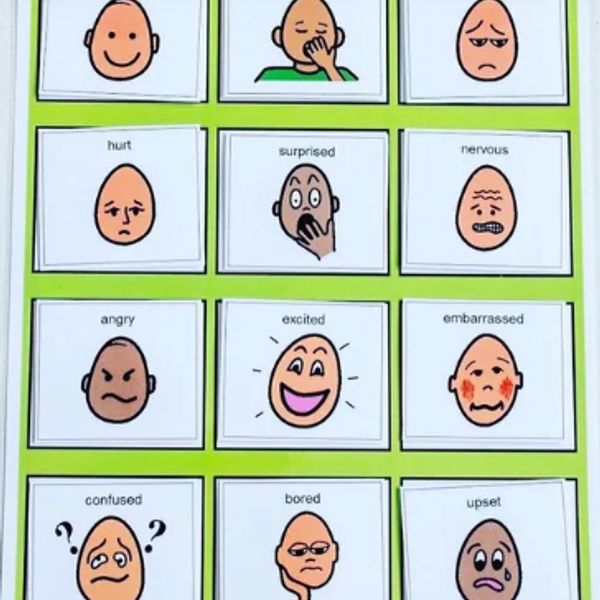
https://www.littletickcreations.com.au/
At GraceHunt Connections, we understand that for many individuals, the internal world of emotions can feel like a "logistical hum" that is too loud to decipher. When a participant is asked, "How are you feeling?" the pressure to find the right words, process the social expectation, and monitor their own internal state all at once can be the very thing that triggers emotional dysregulation.
By providing Visual Scaffolding for emotions, we remove the "verbal tax" and offer a safe, predictable avenue for communication. This is where visuals such as those from Little Tick Creations have been an invaluable resource for our day together.
The Visual Bridge to the Internal World
Using visuals, such as emotion wheels, color-coded zones, or simple "feeling" icons, serves as a Physical Scaffolding for the mind.
• Reducing Cognitive Load: When a participant is beginning to feel "high-revving" or frustrated, their access to verbal language often drops. A visual allows them to "point and communicate" without needing to navigate the complex motor and cognitive pathways of speech.• Externalising the Internal: A visual board takes an abstract, overwhelming feeling and makes it a tangible object. This allows the participant to remain in a "Reflective" state rather than a "Reactive" one. They are looking at the emotion on the card, rather than being trapped inside it.
Protecting the "Sanctuary" of Calm
The risk of Meltdowns or vocal resistance often stems from a participant feeling misunderstood or trapped by their own sensations. Visuals act as a preventative Super Structure:
1. Early Detection: If Matthew can point to a "Yellow Zone" or a "Frustrated" icon early on, we can immediately Pivot to Plan B or C. This prevents the emotional "snowball" from turning into a crisis.2. Validating the Voice: When we respond to a visual choice with, "I see you're feeling overwhelmed, let's take a break," we are building Safety and Trust. The participant learns that they don't need to "up the ante" with behaviors of concern to be heard.3. Choice and Control: Giving a participant a "Feeling Board" puts them back in the "Driver's Seat." They are the experts on their own internal experience, and the visuals give them the power to share that expertise with us.
As an Independent Support Worker, I use these visuals to ensure our time together remains a Sanctuary. If I notice a participant's body language shifting, I don't increase the verbal pressure. I simply offer the visual tool.
Whether we are using a "Thermometer" to measure anger or a "Weather Map" to describe a mood, the goal is always the same: providing Meaning and Purpose through a communication method that honours their current capacity. We aren't just identifying feelings; we are preventing the overwhelm that leads to dysregulation.
REGULATION
Executive Functioning
Executive Functioning

The most profound benefit I see as an Independent Support Worker isn't just "more words", it’s the immediate drop in Emotional Regulation challenges.
• Reducing the "Communication Crisis": When a participant cannot be understood, their nervous system often moves into a "reactive" state. By giving them a familiar method to express a need (like "finished," "help," or "break"), we remove the pressure and allow them to stay in a "reflective" state.
• Building Confidence and Agency: Using these cards puts the participant back in the "Driver’s Seat."Every time they successfully use a sign to get a need met, they build a sense of Meaning and Purpose. This confidence acts as a shield against the anxiety of not being heard.
• The "Safe Connection": Shared learning strengthens the Safety and Trust between us. When we learn a sign together, it becomes a "secret language" that signals: "I am listening, and I value your voice."
For the participants I support, a sensory tub is far more than a container of rice or kinetic sand. It is a portable Sanctuary, a controlled environment where we can build the "Super Structure" for sensory processing and emotional regulation.
In my work as Independent Support Worker, I use these tubs as a primary tool for Sensory Scaffolding. They allow a participant to meet their underlying needs in a way that is safe, predictable, and entirely within their Choice and Control.
The Therapeutic Power of the "Tactile Anchor"
Sensory tubs provide what I call a "Tactile Anchor." For a participant who is feeling "high-revving" or overwhelmed by the "logistical hum" of the world, the rhythmic act of pouring, sifting, or burying their hands provides immediate grounding.
• Regulating the Nervous System: Deep pressure input (proprioception) from digging through heavy beans or beads can lower cortisol levels. It moves the participant from a "reactive" state into a "reflective" one.
• A Safe Space for Exploration: For those with sensory defensiveness, the tub offers a low-stakes way to explore new textures. Because the participant is in the "Driver’s Seat," they decide how much and how fast they interact with the materials.
Executive Functioning
Executive Functioning
Executive Functioning

Connect 4: Strategy and Turn-Taking
Connect 4 serves as a brilliant framework for Social Scaffolding and Executive Functioning.
• Turn-Taking and Tolerance: Waiting for the other person to move can be a significant challenge. We use this time to practice "active waiting", watching what the other person does and predicting their intent.
• Predicting Outcomes: Connect 4 requires looking two steps ahead. For participants who struggle with "what happens next," this game makes Predictability tangible. If I put a token here, then my opponent might put one there.
• Handling the "Block": When an opponent blocks your path to four-in-a-row, it’s a micro-moment of lost Choice and Control. We use these moments to practice the "Pivot." If Plan A is blocked, we immediately look for Plan B or C, mirroring the flexibility we use when out in the community.
GraceHunt Connections: The "Why" Behind the Play
